I am a Year 6 student at Panmure Bridge School, Auckland, New Zealand. My teachers are Mr Wong and Mr Ogilvie.
Monday, 30 August 2021
Find a Fact / Usain bolt
Friday, 9 July 2021
Party Popper Creation
My company and I designed one party popper each for us.
First we created our drawing to put on our party popper. We chose to draw a game called among us. This game is when people gather together to find out who are the two imposters that are trying to eliminate the crewmates to win. We finished designing our party popper and now doing the striker.
Afterwards we created our striker. For the striker we used a nut. We were going to use a whiteboard marker but we could not.
Finally we added the filling and tested it all together. We added a specific amount of filling, we used small fuzz balls and glitter stickers. We tested the party popper and it worked very effectively.
The experience was amazing because our party popper worked very effectively and all the filling went high. We could have added more filling to make a bigger celebration.
Friday, 2 July 2021
Party popper Prototype
My company, and I created a party popper design.
First we modelled all the parts to see which would be best For example we used a thicker rubber band instead of a short rubber band. We tested both rubber bands to see which one would hit the cup more effectively. We found out that the thicker rubber band worked more effectively than the shorter rubber band.
Afterwards we assembled our fixes that we are going to use. We changed the small plastic cup into a bigger plastic cup and used a whiteboard marker for our weight to shoot the filling out more stronger. The whiteboard marker was very strong when shooting up to the cup.
Finally we tested all the updated design options. All of the designed options worked very effectively and strongly.
I learned a lot about how to design a party popper and what it needs. My company skittle poppers, and I found out that all the parts work strongly and effectively.
Friday, 18 June 2021
Party Popper Plan
Thursday, 27 May 2021
3 Similiar simple machines
Friday, 21 May 2021
The three similiar simple machines
Thursday, 13 May 2021
Simple Machines
Thursday, 6 May 2021
Simple Machines
Thursday, 1 April 2021
Compare and Contrast | Maori Haka & Cook Island Haka
I wrote down the differences between the Maori haka and the Cook Island haka.
Next I wrote down the similarities for the Maori haka and the Cook island haka. Afterwards I wrote down the differences. One of the differences was: The Cook Island haka are not stomping their feet / The Maori haka stomps their feet.
Afterwards I put the differences and the similarities on a slide.
I enjoyed learning about the differences and the similarities about the Maori haka and the Cook Island haka.
Thursday, 18 February 2021
About Me 2021
Talofa Lava.
My name is Emmanuel. I am Samoan. I am in LS1 at Panmure Bridge School. I enjoy doing maths and I like to play at the park in my own time.
Wednesday, 16 December 2020
Presentation
We presented our presentation for our emergency shelter. An emergency shelter is a place that keeps people safe from natural disasters.
First, we made our presentation and our script. And then started memorizing our lines for when we present.
Next, a group chose us to present. We started our presentation off by greeting them and then started giving information about our 3D model.
Lastly, when all the groups finished presenting our teachers gave all the groups feedback and chose one group to work with. Our feedback was that our greeting was good but as we went on the presentation was getting lackey.
The only good things I did was talking about our 3D model, and explaining our information. But the only things I needed to do was focus more, be confident to speak, and to remember my lines.
Friday, 4 December 2020
Emergency shelters
We designed an emergency shelter. An emergency shelter is a place that keeps people safe from natural disasters.
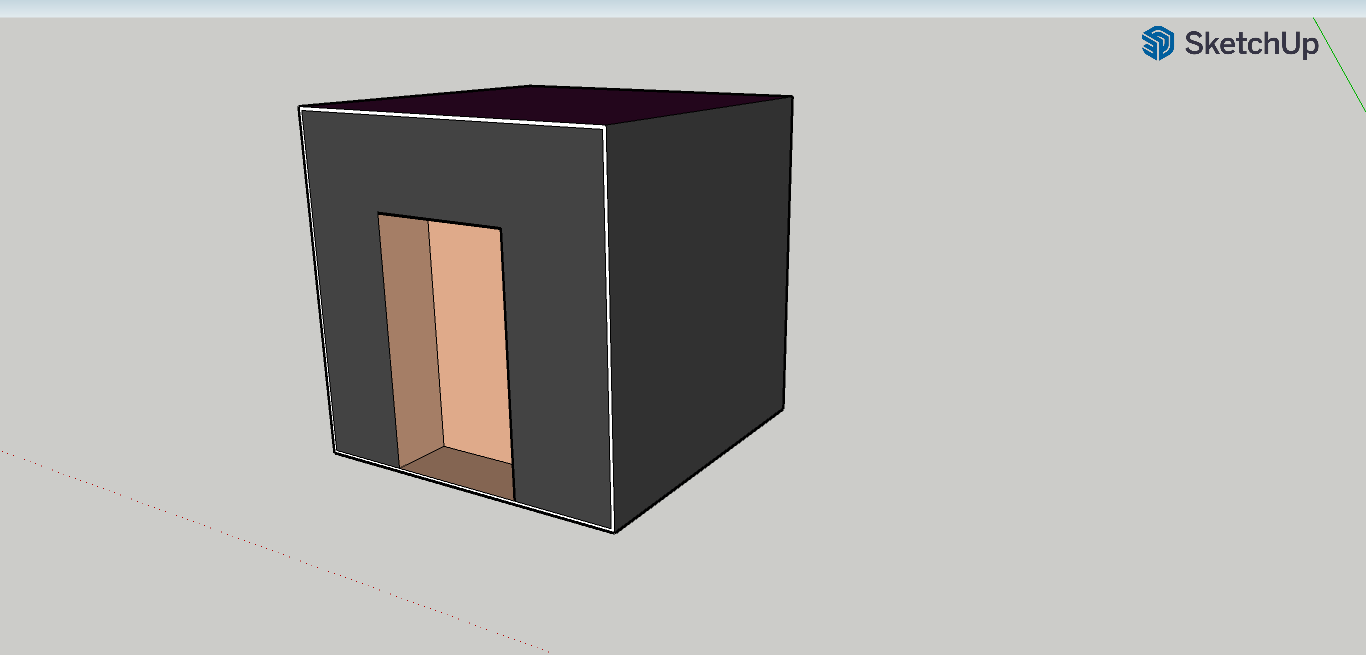
First, we drew up our 3D net. A 3D net is something that can be folded into a 3D shape. Our shape was a cube. We needed to draw six 15 cm squares.
Next, we transferred the 3D net into card by measuring the length and width. Once we finished we started cutting it out and folding it into a cube.
Lastly, we started to build our model which was supposed to look like the card. We used cardboard to build the model because it’s strong enough to hold the shelter up.
Thursday, 26 November 2020
Shelters Materials
There are different types of shelters that have different materials that can stand against natural disasters. Materials that could go through storms are materials like concrete, wool and steel frames.
Concrete can be used for the outside layer because water can’t go through the concrete which is good.
Wool can be used for the middle layer because wool can keep the coldness of wind out of the shelter which makes the shelter warm.
Steel frames can be good to hold up the shelter because steel frames are strong to hold up something and if there’s nothing under the roof it might fall down.
Knowing which materials are good for the right disaster it’s important because an emergency shelter with the right materials can save people's lives.
LI:To prepare material order for construction.
Friday, 20 November 2020
Model Materials
This week we have been learning about different materials for models that can go against natural disasters.
First we had to brainstorm and think of what materials can help us when natural disasters are happening.
Next we had to choose our materials that we needed to build our shelters. Our group chose: Reinforced concrete, wood, vinyl, and stone.
Afterwards, we needed to find the height and the width for the walls and the roof. The walls were 20cm for the height and 25cm for the width. For the roof it was 25cm for the height and 25cm for the width.
Then we wrote our materials we need, how much do we need, and the height and width.
Friday, 6 November 2020
Inquiry
This week for inquiry we were creating our own emergency shelter. An emergency shelter is a place that protects people from natural disasters.
First we looked at different types of shelters that are in different shapes. We had to figure out if they were a good or bad shelter.
Next we thought and discussed what the shape of our shelter would be. My group decided that the shape should be a triangle. We thought this would be a good shelter against strong wind.
Then we created our own shelter on sketch up. This app is used to create 3d models.
After that we discussed which material would do best if this shelter was going to be created in real life. The best material we could think of was Tungsten. Tungsten is a type of metal that is extremely rare to find. It cannot be broken either.
If we could change specific things in our shelter, the things we would change are adding windows to see, another entrance to our shelter and probably taking out the legs and ropes.
We found this task difficult because it was hard trying to design our shelter but it was very fun because we like each other's ideas even though we weren’t able to add those features in.
Friday, 30 October 2020
Emergency shelters
Emergency shelters help and protect people from disasters and accidents like: tornado, volcano eruptions, strong storms or winds, and bushfires or house fires.
Strong wind shelters can be used in a strong wild storm. One of the shelters were titanium. Titanium is strong use because it can hold strong wind and cannot be broken.
Tsunami shelters can be used in a flood. One of the shelters are steel frame. Steel frame is good use because steel-frame structures are recommended for vertical evacuation structures.
Shelters are used to protect people from disasters. Some shelters are very good use because they can be strong.
Thursday, 22 October 2020
Insulators
Insulators are used to stop heat from moving place to place. Five materials were tested for the ability to insulate: glass, plastic, metal, paper, and polystrene.
The best insulator for keeping things warm was polystrene because the average cooling rate was 8. The worst insulator for keeping things warm were: plastic, tin, and paper.
The best insulator for keeping things cool were: paper and polystrene because the average cooling rate was 2. The worst insulator for keeping things cool was glass.
The best insulator for both warm and cool was polystrene because both average cooling rates were the lowest.
Thursday, 15 October 2020
Inquiry | Experiment
This week for inquiry we experimented certain materials. We used paper towel as our certain material. First we had to use a beaker to measure water to 100mls. Next we had to measure our material to 50gm.
Then we had to do five drops of food colouring into the 100mls of water. Next we put the paper towel into a tote tray and poured the water onto the paper towel.
After that we checked how much water was absorbed from the material and how much was leftover. Then we wrote our results onto the recording sheet.
I enjoyed this experiment because I learnt how to conduct an experiment. Also paper towel is an absorbent material.
LI. To learn and practise expermental materials.
Friday, 18 September 2020
Hazards and Risks
Thursday, 10 September 2020
Inquiry | Risk Assesment quiz
LI: to assess consequences
This week we learned about assessing risk.
We had to assess risk from then. There are five risk definitions. They are low, likely, possible, elevated and extreme.
The first task was that we had to pick a number out to 1 to 5. There were fifteen questions and my group and I did a discussion of what number we should pick to see if it was correct, almost or incorrect my group and I did a vote.
After voting each question we got two correct answers, two incorrect answers, and the rest was almost. Then we corrected our answer and did the next task. The next task was we had to write our own situation from 1 to 5. After that we mixed up the answer and deleted those numbers.
This task was hard but we worked together and finished the task.